Engineering services

Guided support from early sizing to commissioned renewable assets

Byd services are built for teams that already understand renewable energy but still need a dependable supplier interface. We help translate project requirements into practical product choices, documentation packages, and commissioning steps. The service model is intentionally steady: clarify the operating profile, confirm constraints, document assumptions, then support field execution.

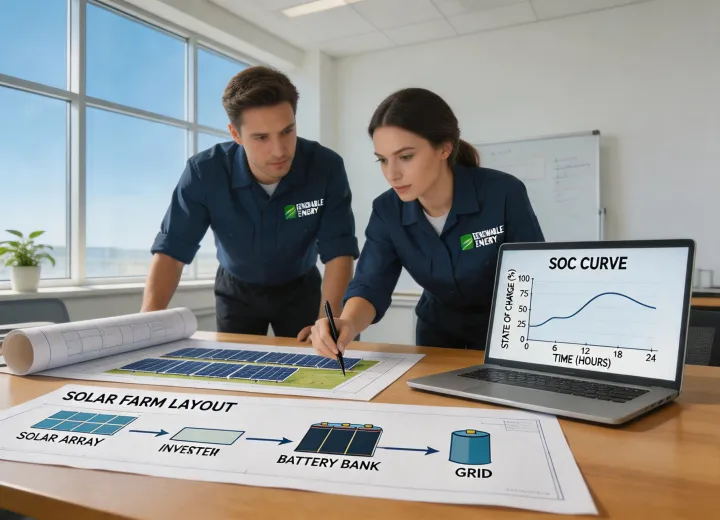
Engineers reviewing battery design

Project scoping

We review site voltage, target usable capacity, charge and discharge window, ambient range, enclosure location, grid region, and expected commercial operating date. This keeps the first offer aligned with how the asset will operate rather than how a catalog page is organized.

Integration support

Battery racks, hybrid inverters, EMS logic, EV chargers, and PV modules must communicate cleanly. Byd helps EPC and integrator teams check BMS protocol, inverter limits, SCADA points, protective devices, and commissioning responsibilities before equipment ships.

Documentation packages

Procurement teams often need more than price. We help assemble warranty terms, compliance references, installation requirements, datasheets, test summaries, and maintenance guidelines so lender, owner, and engineering reviewers can move through the same evidence set.

Lifecycle coordination

After commissioning, asset teams need a route for alarm review, spare-part planning, firmware coordination, and performance questions. We describe realistic support commitments and avoid absolute uptime promises that no responsible supplier can guarantee.
Decision support

Questions we clarify before a quote

We document the selected DoD, reserve margin, operating temperature range, auxiliary load assumptions, and expected EoL retained capacity. That makes capacity comparisons more transparent for developers and owners.

Region matters. North American projects may emphasize UL 1741 SA, IEEE 1547-2018, UL 9540, and UL 1973, while European projects may need CE, VDE, IEC 62109, or IEC 62619 references.

Depot charging often creates short, high-power peaks. We review charger count, charging windows, vehicle dwell time, grid service limit, and load-management controls before sizing a battery buffer.

Before support

Teams compare quotes with different DoD assumptions, unclear PCS sizing, incomplete certification references, and warranty terms that do not match the actual duty cycle. The result is more revision loops and avoidable commercial tension.

After support

Stakeholders work from a shared basis: usable kWh, power rating, chemistry, cycle target, grid region, thermal strategy, commissioning scope, and service path. The project can then move toward procurement with fewer hidden assumptions.

Bring us the project profile. We will bring the right review checklist.

A productive first exchange usually includes location, AC capacity, target kWh, desired backup or dispatch duration, grid interconnection stage, and any owner documentation requirements.